MAIN MENU

Information
MAIN MENU

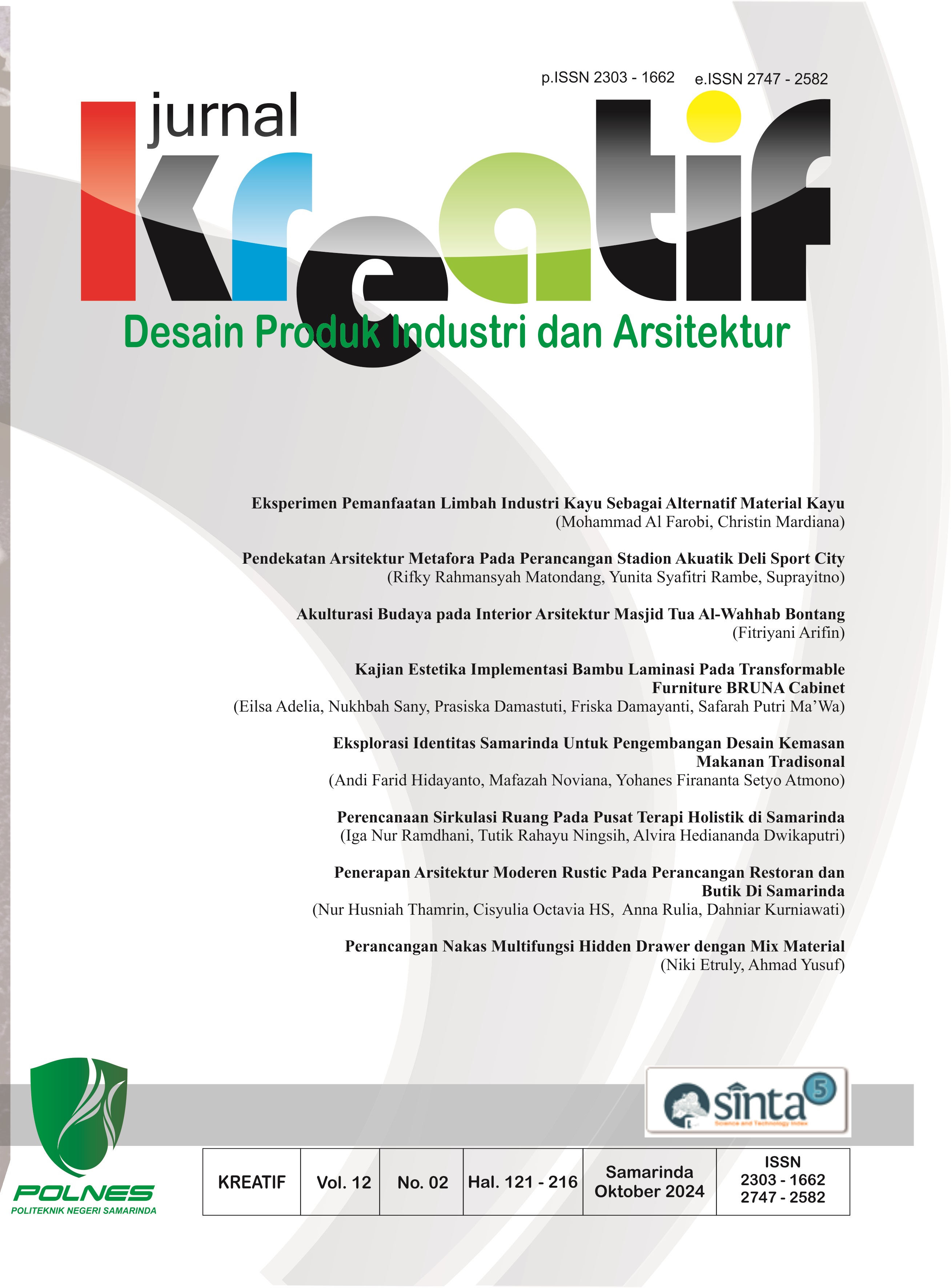
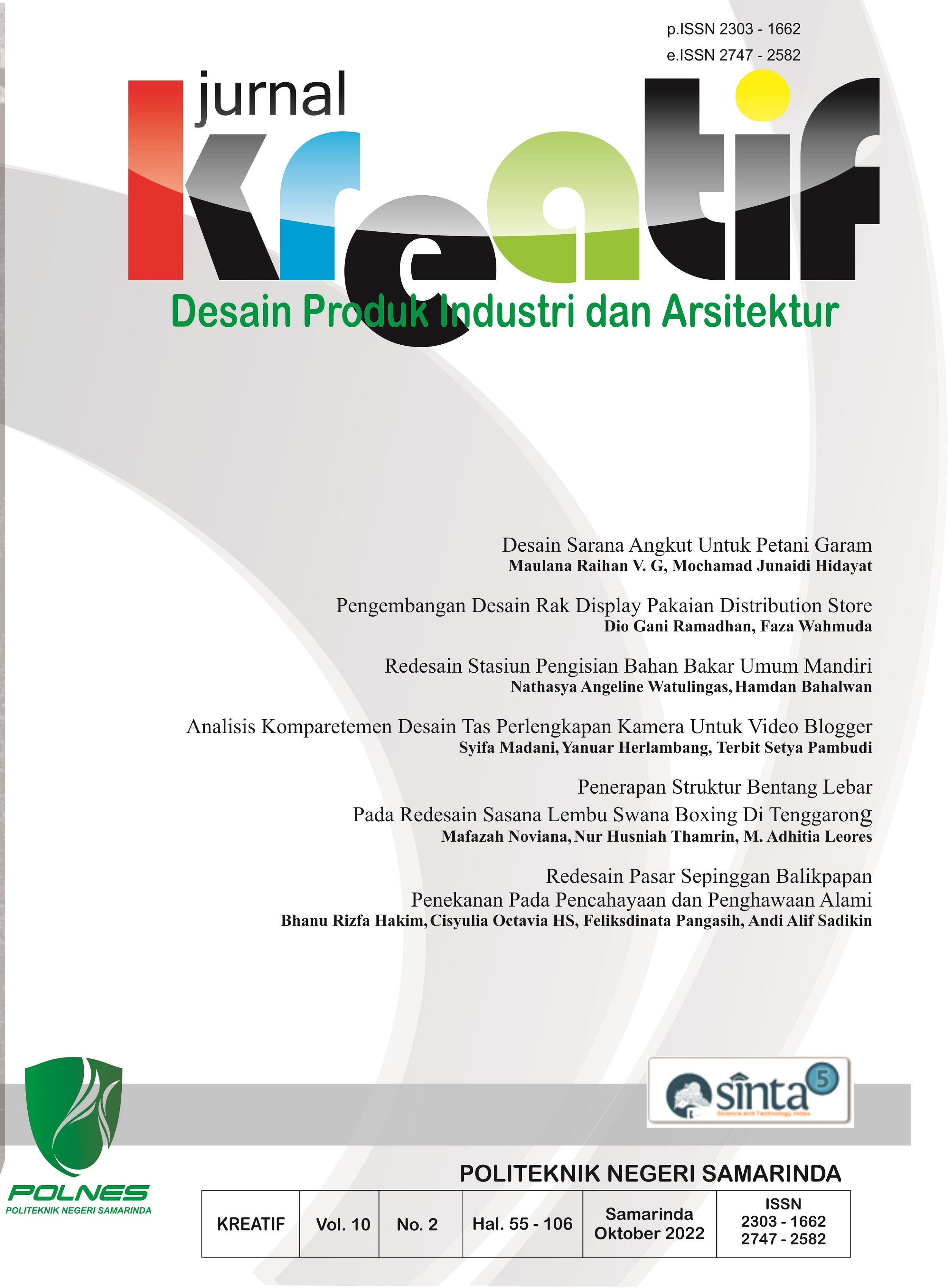
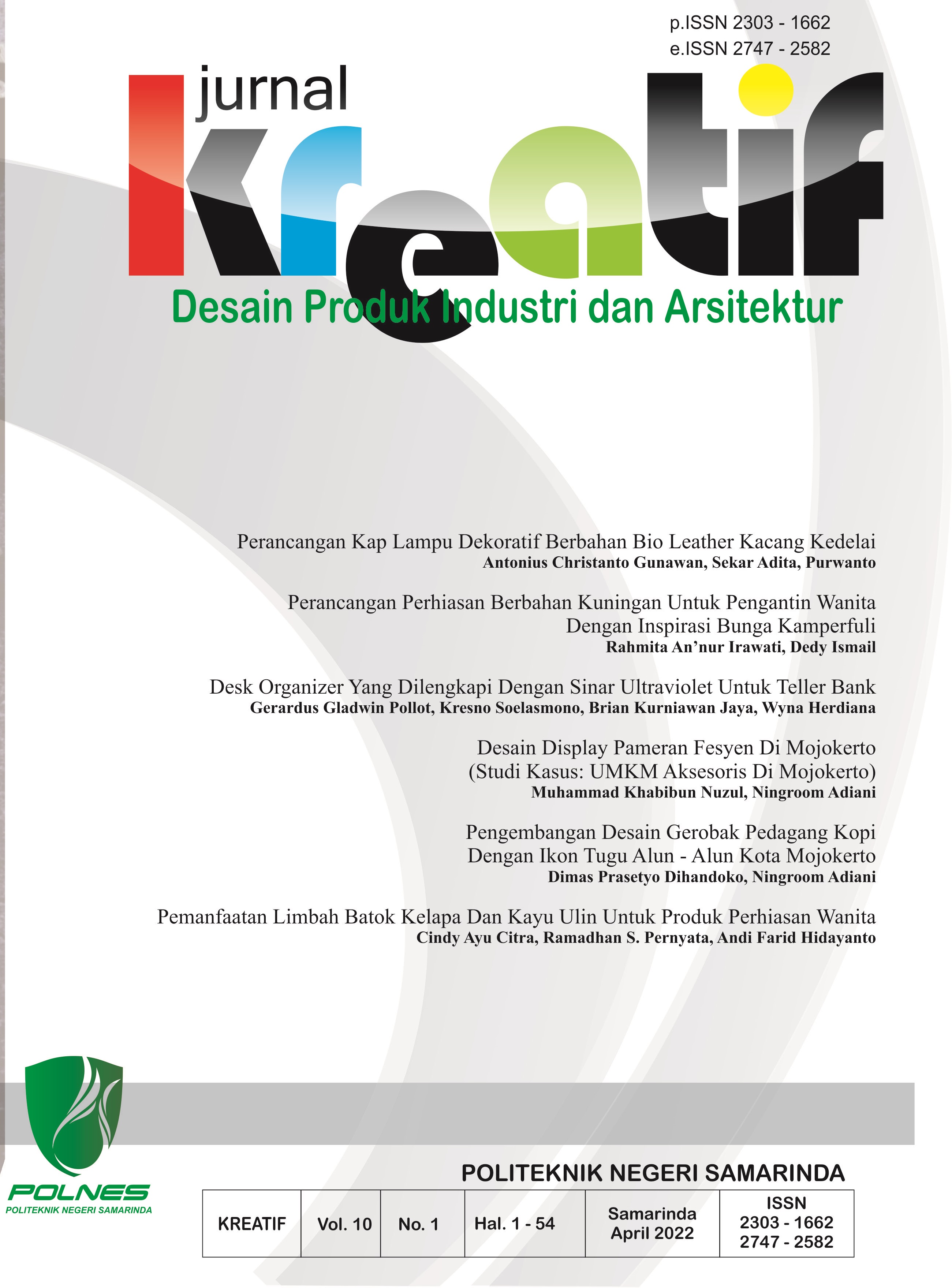
This issue of Jurnal Kreatif presents a diverse range of research topics in product design, architecture, and design innovation, highlighting the integration of functionality, aesthetics, technology, and user-centered approaches. The featured studies include the exploration of modern Pop Art architecture in mixed-use apartment planning in Samarinda, the design of public seating facilities along the iconic Jalan Tunjungan corridor in Surabaya, and the development of pop-up cards as an emotional education medium for children aged 4–6 years. Other papers examine the design of a semi-portable hamster cage with an automatic feeding system powered by the hamster's kinetic energy, as well as a wooden writing desk using finger-joint laminated material and knockdown construction. Collectively, these studies demonstrate the breadth of design practice in addressing spatial, educational, functional, and technical challenges through creative and context-sensitive solutions. Overall, this issue highlights the interdisciplinary nature of design research in connecting innovative concepts, material exploration, technological applications, and human needs to support the development of meaningful design solutions.
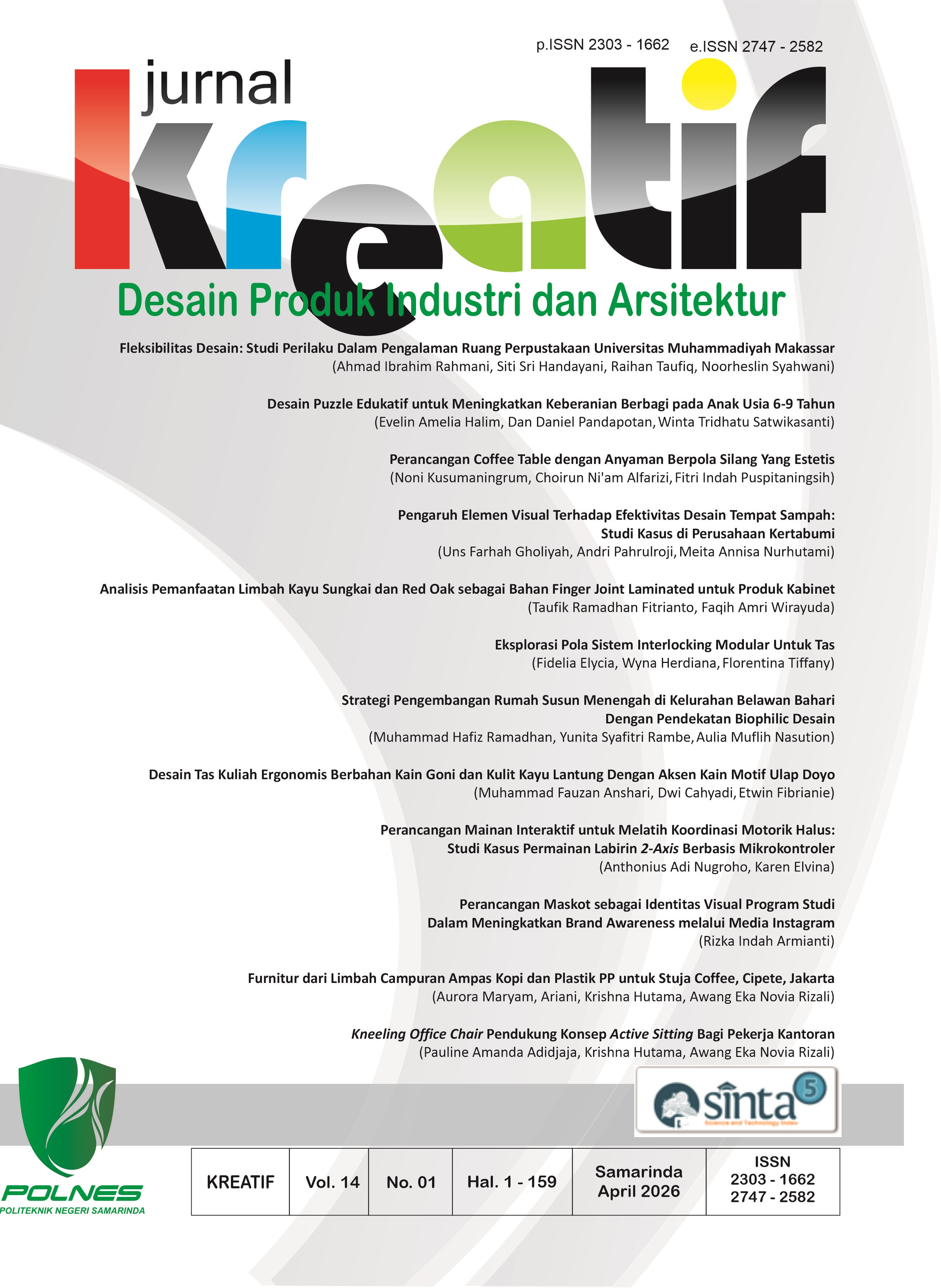
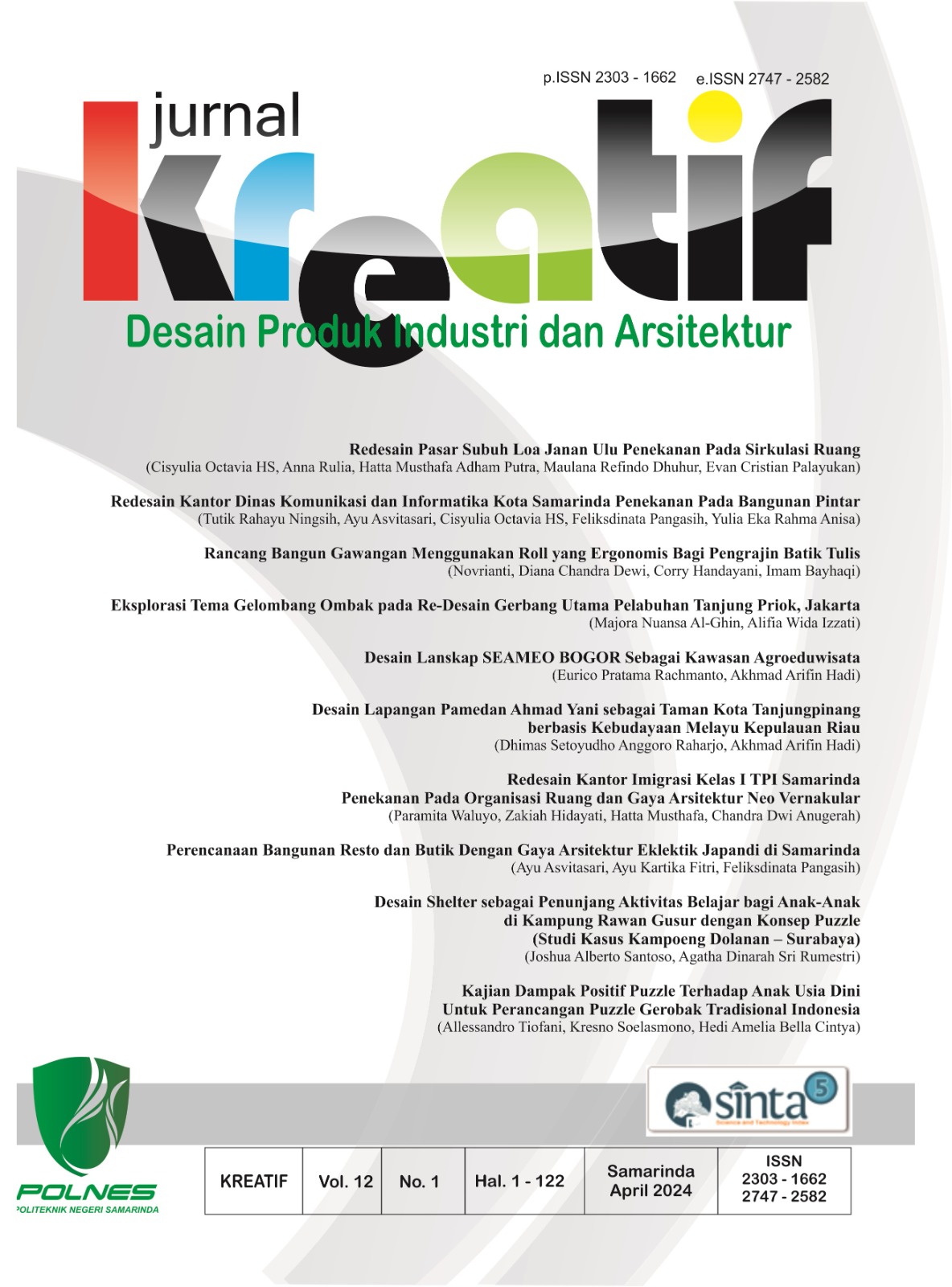
This issue presents a diverse range of research topics in product design, architecture, and design innovation, with a focus on functionality, aesthetics, sustainability, and user-centered solutions. Several papers explore product development through material experimentation and innovative design approaches, including the utilization of Sungkai wood and Red Oak waste for finger-joint laminated cabinet products, modular interlocking systems for bags, and furniture made from mixed coffee grounds and polypropylene waste. Other studies examine the influence of visual elements on waste bin design effectiveness, the development of ergonomic bags using natural materials and traditional Ulap Doyo motifs, and the design of educational puzzles and interactive toys to support children's learning and motor skill development. In the field of architecture and spatial design, this issue features research on behavioral flexibility in library environments and the development of mid-rise apartment buildings using a biophilic design approach. The collection also highlights visual communication and branding through mascot design to strengthen program identity and brand awareness on Instagram, alongside the design of an aesthetic coffee table incorporating cross-pattern weaving techniques. Overall, the articles demonstrate the interdisciplinary nature of design research, integrating material innovation, cultural identity, user experience, sustainability, and technological development to address contemporary challenges in product design, architecture, and the built environment.
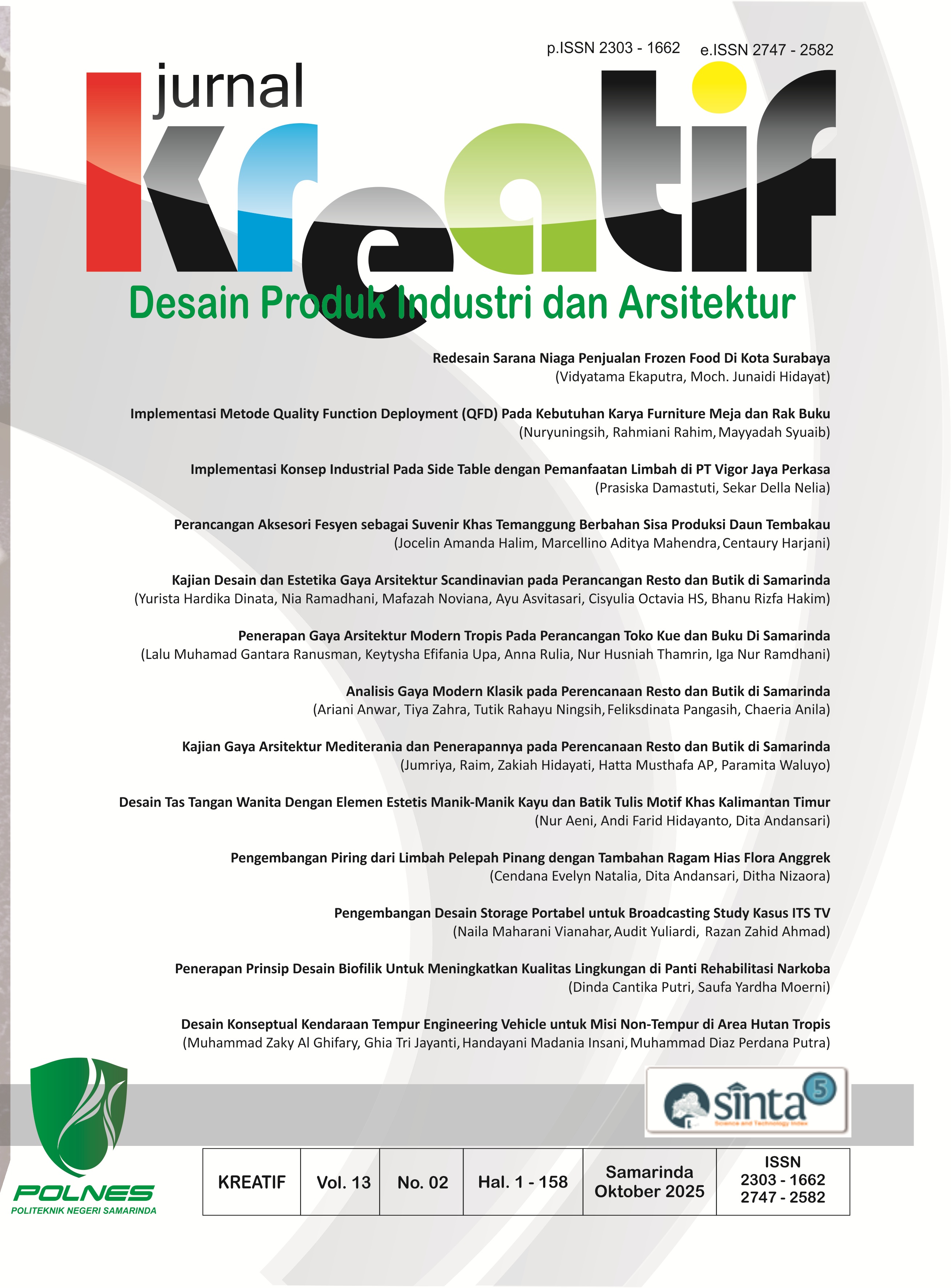
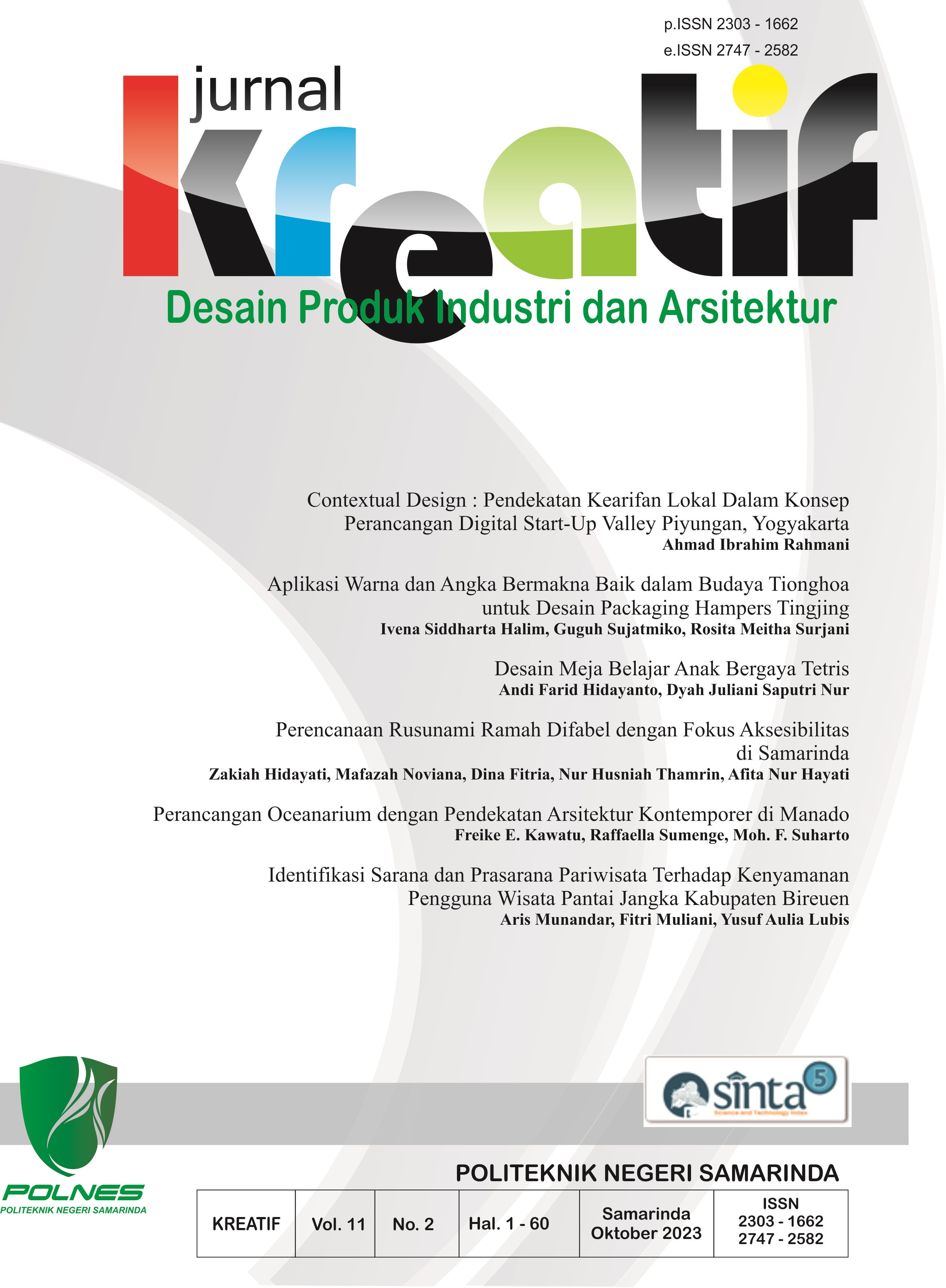
The paper in this edition show the diversity of topics focusing on design, architecture, and product innovation based on community needs and the use of local potential. Several papers focus on the redesign of commercial facilities and the application of analysis methods such as Quality Function Deployment (QFD) to improve the quality of products and services. On the other hand, there are works that discuss the concept of sustainability and waste utilization. For example the use of industrial waste and production residues to produce new products such as side tables, handbags, and plates made from areca nut fronds, and fashion accessories based on local materials. Moreover, several papers discuss the study of architectural styles applied in the design of restaurants, boutiques, and bakeries and books which shows attention to the aesthetics as well as the function of space. The biophilic design aspect is also discussed to improve the quality of the environment in rehabilitation facilities. In addition, there are studies that develop portable storage designs for broadcasting needs and also the concept of non-combat combat vehicles, which affirms the design's contribution to the field of technology and defence. In general, this research collection shows the integration between creative design, technology, and sustainability, which have orientation on the development of innovative products, spaces, and systems. The themes discussed are not only relevant to academic needs, but also have broad potential applicability in industry, environment, and daily life.
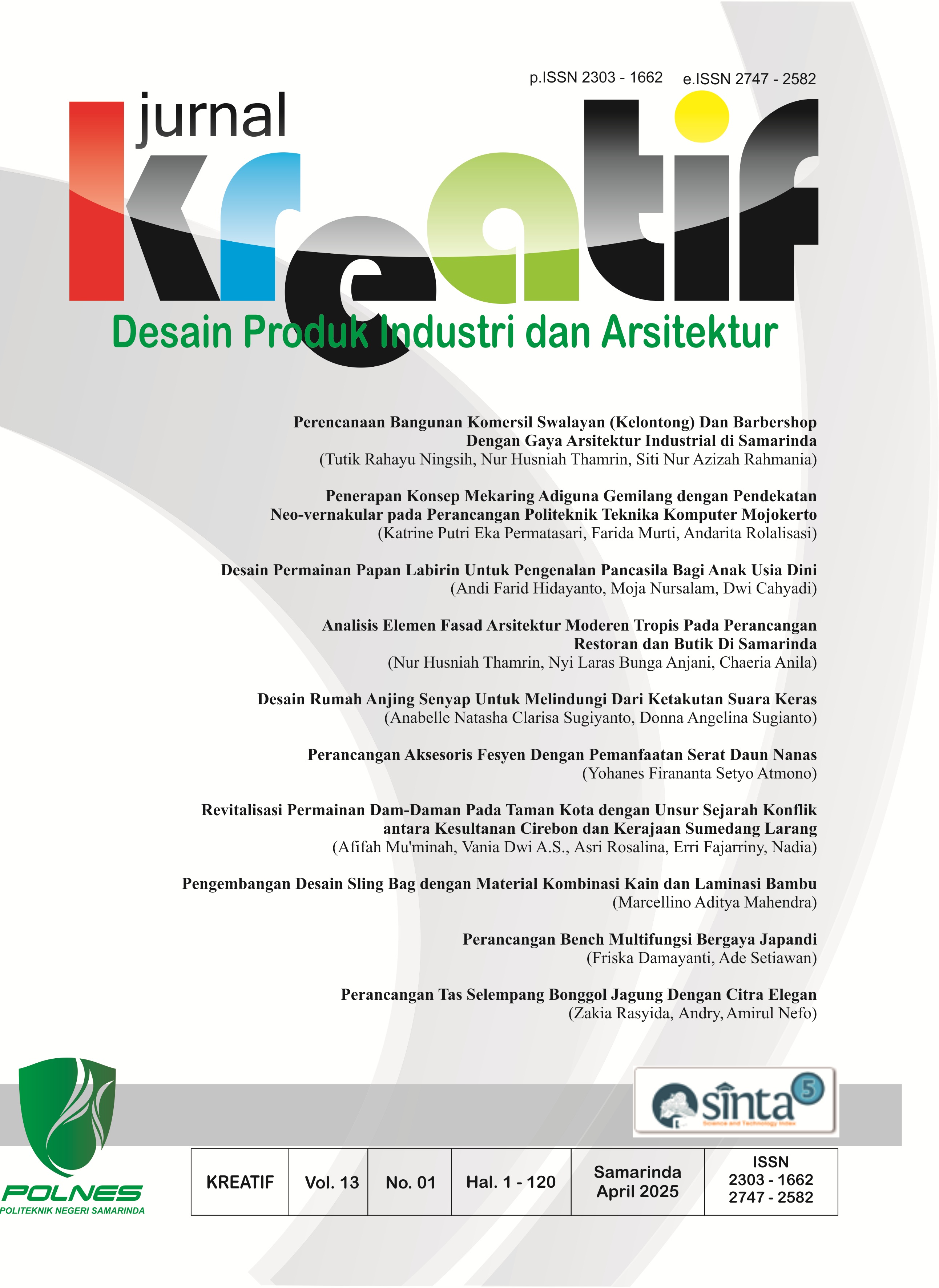
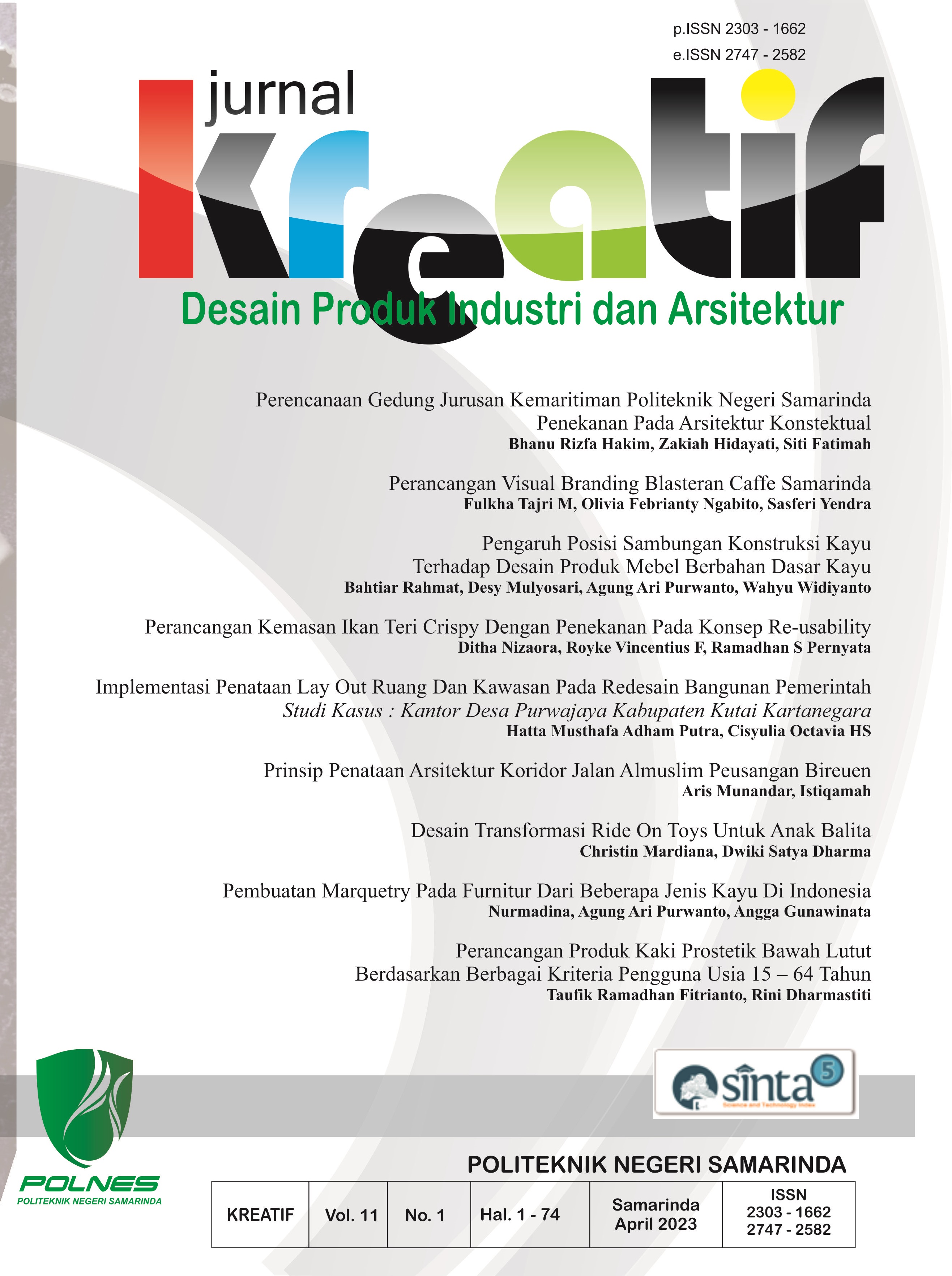
This edition discusses various aspects of design and Planning in the fields of product design, architecture, and educational games with innovative and sustainable approaches. In architecture, there is a study on the planning of industrial-style buildings for supermarket and barbershop in Samarinda, the application of the concept of Mekaring Adiguna Gemilang with a neo-vernacular approach at polytechnics in Mojokerto, and an analysis of tropical modern architectural façade elements in restaurants and boutiques. In the field of product design, the research includes the development of fashion accessories made of pineapple leaf fiber, the design of sling bags from a combination of fabric and bamboo lamination, and also sling bags made of corn cobs with elegant images. Other innovations are a Japandi-style multifunctional bench and a soundproof dog house to protect the dog from loud noises. There is a planning of a labyrinth board game to Introduce Pancasila (Indonesia Five Principles) for children and also the revitalization of the Dam-Daman game (a traditional game) with historical elements of the conflict between the Sultanate of Cirebon and the Kingdom of Sumedang Larang. The overall text highlights the blend of function, aesthetics, and cultural values in innovative and contextual design.
Pusat Penelitian dan Pengabdian Masyarakat, Politeknik Negeri Samarinda
Jl. Ciptomangunkusumo, Kampus Gunung Panjang, Samarinda Seberang, Samarinda, Kalimantan Timur, Indonesia
E-mail: kreatifjurnal@gmail.com, kreatif_jurnal@yahoo.co.id

This is licensed under a Creative Commons Attribution-ShareAlike 4.0 International License.